Contractor Marketing
AI Search Is Changing How Homeowners Find Contractors — Here's What It Means for You
Google AI Overviews now appear above organic results for home services searches. Here's what your site needs to get cited and pull calls from AI results.
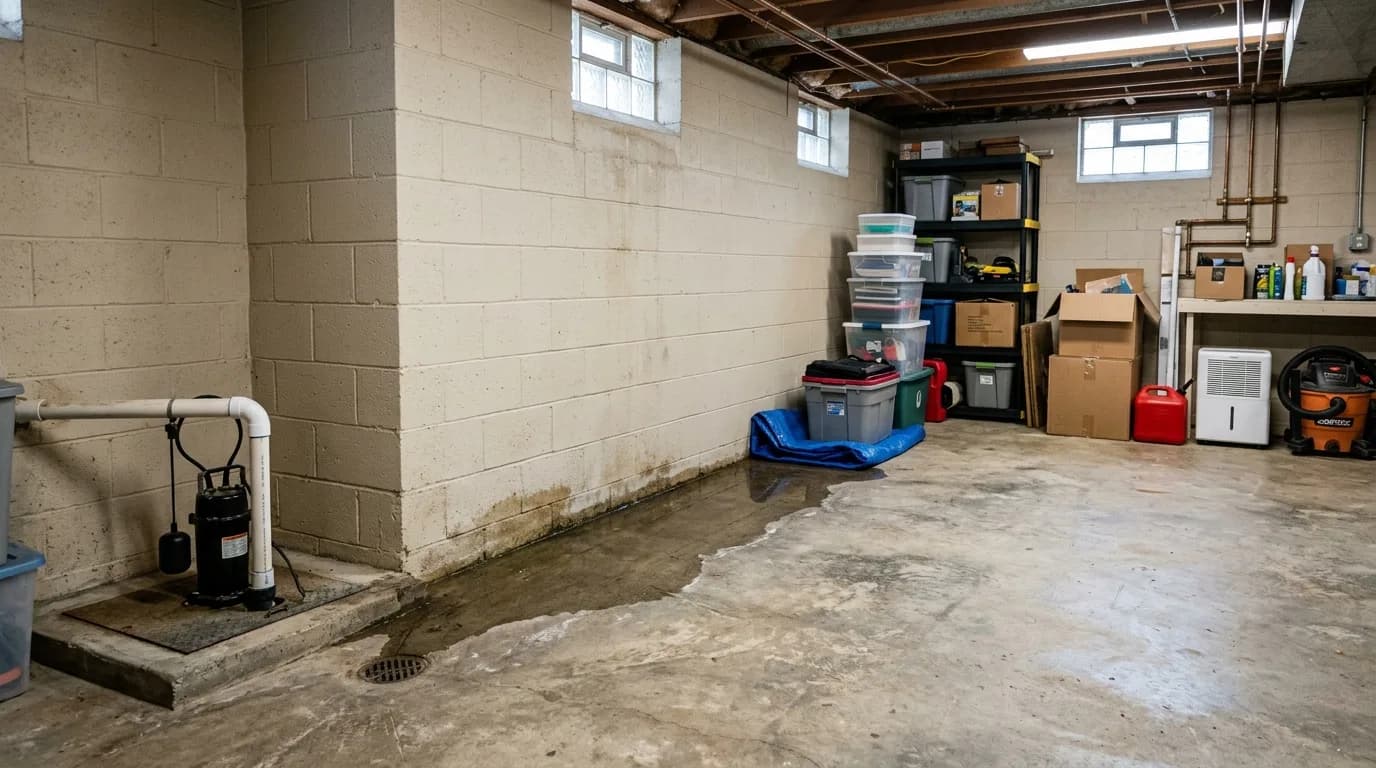
You type "mold remediation near me" into Google and before any search results appear, there's a box. It summarizes the topic, pulls from a few websites and delivers an answer directly on the search page. Google AI Overviews launched broadly in the US in 2024 and have been expanding since, appearing now for home services searches that previously showed only ads and organic results.
The websites Google cites in those summaries get a visible attribution and a link. The rest get nothing from that interaction.
If your website isn't structured to be cited, you're invisible to a growing share of homeowner searches — not because your rankings dropped, but because the search page changed underneath you.
Here's what changed, what it takes to get cited and why smaller contractors compete well here against larger platforms.
What Google AI Overviews are
Google AI Overviews (previously called Search Generative Experience, or SGE) is a feature that generates a direct answer in search results, sourced from multiple websites, and displays it before organic results.
When a homeowner searches "how much does mold remediation cost" or "do I need a professional to remove crawl space mold," the AI Overview gives them an answer. That answer cites two to five websites as its sources.
AI Overviews appear for roughly 15 percent of all US searches, with the rate higher for informational queries — which is exactly the type homeowners ask before they call a contractor. "Is mold dangerous?" "What causes basement moisture?" "How long does waterproofing last?" These are the searches where AI Overviews appear most consistently.
What homeowner searches looked like before, and what they look like now
In 2024, a homeowner searching "mold remediation [city]" would see a few paid ads at the top, then the Map Pack with three businesses, then organic results below.
In 2026, that same search often shows an AI Overview first, before paid ads and before the Map Pack. The organic results are further down the page than they were two years ago for anyone who doesn't appear in the AI summary at the top.
This creates a real split. A contractor not cited in the AI Overview but holding the first organic result is now below the fold for many homeowners. A contractor cited in the AI Overview can pull clicks from a position they don't technically rank.
5 things your website needs to get cited in AI results
1. Direct answers, stated up front
AI Overviews pull from pages that answer questions clearly and fast. Google's algorithm looks for pages that give the searcher what they need without making them work for it.
If someone asks "does mold come back after remediation," the AI Overview cites a page that opens with a clear answer in the first two sentences — not one that starts with a paragraph about how common mold is in American homes before eventually getting to the point.
The format that works is simple: state the answer immediately, then explain it in the next three to five paragraphs. If your service pages and blog posts bury the answer in long introductions, that's the first thing to fix.
2. Schema markup
Schema markup is code added to your website pages that tells Google precisely what your content is about. For contractor websites, the three types that matter most are LocalBusiness schema on your homepage and contact page, Service schema on each service page and FAQPage schema on any page with a question-and-answer section.
FAQPage schema is especially valuable for AI Overview citations. When you mark up a FAQ section with proper schema, Google can read your question-and-answer pairs directly, without interpretation, and use them to construct a cited answer. Most contractor websites have no schema at all. This gap takes a few hours to close and pays off across every search that touches your service area.
3. FAQ pages and FAQ sections on service pages
The format AI Overviews draw from most reliably is the question-and-answer structure. A page with a list of common questions and concise answers gives Google exactly what it needs.
Every service page should have a FAQ section at the bottom: "How long does mold remediation take?" "Do I need to leave my house during remediation?" "Is mold covered by homeowners insurance?" Ten to twelve questions per service page, each answered in two to four sentences, creates a dense source of direct answers for Google to pull from.
A standalone FAQ page covering the top 20 questions about your service is even more effective. It functions as a dedicated answer resource, built in the format the AI is actively looking for.
4. Expertise signals
Google's AI Overviews draw from pages that show genuine knowledge, not pages that only claim it. For contractors, that means real job photos (not stock images), a name and brief bio connected to the content you publish, your IICRC certification or state license number listed on your site, a physical address that matches your Google Business Profile and customer reviews that name your service specifically.
These signals tell Google's algorithm that your content was produced by someone with real experience in the trade. That matters more for AI citation selection than raw link authority does.
5. Content that gets updated
AI Overviews prefer current sources. A post published in 2021 that hasn't been touched competes against a post from six months ago that's been updated twice — and the newer one usually wins unless the older one has a significantly stronger authority profile.
For contractors, this means two things. Publish regularly, and go back to update your existing service pages with current information, fresh photos and any changes to your service offerings. A "last updated" date signals recency. Google reads it.
One contractor per market. Check if yours is open.
We don’t work with competitors in the same territory. If we take your market, we are committing to making you the dominant player.
Check your territoryThe schema markup most contractor websites are missing
Schema is the single fastest technical change for improving your chances of appearing in AI results, and most contractor websites have none.
LocalBusiness schema goes on your homepage and contact page. It tells Google your business name, address, phone, service area, hours and business category explicitly, in code, rather than leaving Google to infer those details from your page text.
Service schema goes on each service page. It names the service, describes it, identifies the provider and specifies the area served. When Google's AI is pulling sources for a query about mold remediation costs in a specific city, it's more likely to cite a page that explicitly declares itself as a mold remediation service page for that area.
FAQPage schema goes on any page with a question-and-answer section. When implemented correctly, Google can surface individual Q&A pairs directly in search results, including inside AI Overviews.
All three types together take roughly two to four hours to implement on a standard contractor site. That's a one-time investment that stays in place for years.
The content structure that works
Beyond schema, the structural pattern that AI Overviews cite most often is direct: a clear question, a two-sentence answer and then the supporting context. No lengthy preamble. No keyword stuffing in the opening. The answer first.
FAQ sections work well because they follow this pattern naturally. So do step-by-step process pages. The format that doesn't work is a wall of paragraphs with the key information scattered throughout. Google's AI needs to be able to extract a usable answer without reading the entire page.
A second structural element that matters is internal consistency. If your "mold remediation cost" blog post says $1,500 to $4,000 and your service page says the same range, and your FAQ repeats the same figure, Google sees a consistent, reliable source for that piece of information. Contradictions between your own pages undermine your citability.
Why smaller contractors compete well here
In traditional organic search, a website with hundreds of backlinks from established domains almost always outranks a newer site in the same niche. Domain authority takes years to build.
AI citation selection is more content-focused than link-focused. A smaller contractor website that publishes clear, specific, well-structured answers to common questions can get cited ahead of a national lead generation platform if the content is more directly useful.
Angi and HomeAdvisor optimize for click volume across thousands of markets. They're not writing specific answers to "how much does crawl space encapsulation cost in Memphis." A local contractor who writes that page, structures it correctly and marks it up with schema competes directly for that AI citation against the platform's generic content — and the specific answer gets cited more often.
You don't need 500 blog posts to compete. A focused set of 20 to 30 well-structured pages covering your services, your service area and the questions your customers ask every week is enough to start pulling AI citations in your market.
What this means for your business
The search page looks different than it did two years ago and will look different again in two more years. Contractors who built their entire online presence around a single organic ranking position are finding that position is worth fewer clicks than it used to be, even when the ranking itself hasn't moved.
The contractors getting called from AI Overviews right now are the ones who started treating their website as an answer resource rather than a digital business card. They wrote the FAQ pages. They added the schema. They published consistently enough that Google trusts their site as a current source.
Vapor SEO builds this infrastructure for mold remediation and waterproofing contractors. The FAQ pages, the schema markup, the content library, the GBP signals that feed Google's understanding of your business. One contractor per market.
Book a 15-minute call. We'll tell you where your site stands and what it would take to get you cited in your market.
More from Vapor SEO
Contractor Marketing
Why Your Contractor Website Isn't Getting Calls (And How to Fix It in 2026)
Your contractor website looks decent but generates no calls. Here's the exact list of reasons why, and what a site that actually books jobs looks like.
Local SEO
Local SEO for Home Services: How We Get Contractors to Page 1 in 90 Days
Most SEO agencies promise page 1. Here's the exact month-by-month sequence we run for mold remediation and waterproofing contractors to get them there.
Local SEO
Google Business Profile for Contractors: The Complete Guide (2026)
Google Business Profile is the single most important local SEO tool a contractor has. Here's how to set it up, optimize it and own the Map Pack.